India’s GCC Growth Triangle: How Bengaluru, Hyderabad & Pune Are Reshaping the Future of Real Estate
-
by admin
- Real Estate
- 0
The Next Chapter of India’s Urban Growth Story
Over the past decade, India has quietly evolved from a global outsourcing destination into something far more powerful — a strategic innovation hub for the world’s largest corporations.
At the heart of this transformation lies the rapid expansion of Global Capability Centres (GCCs).
Today, multinational companies are not merely operating support offices in India. They are building innovation labs, product engineering hubs, AI research centers, analytics teams, and global command centres that influence worldwide business operations.
This shift is creating a profound ripple effect across India’s real estate landscape.
From commercial office demand to residential development, infrastructure expansion, and emerging micromarkets, GCC growth is redefining how India’s largest cities evolve.
And leading this transformation is a powerful urban corridor often referred to as India’s GCC Power Triangle:
Bengaluru, Hyderabad, and Pune.
Together, these three cities account for nearly 65% of India’s GCC ecosystem, making them the epicenter of global enterprise activity in the country.
For real estate developers, investors, and homebuyers, this trend signals something extremely important:
The next decade of real estate value creation will be driven by employment-led urban growth.
India’s GCC Boom: A Global Phenomenon
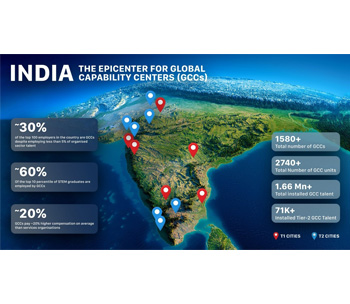
India today hosts more than 1,700 Global Capability Centres, representing over 53% of the estimated 3,200 GCCs worldwide.
These centres support operations for Fortune 500 companies, global technology leaders, financial institutions, pharmaceutical giants, and advanced manufacturing firms.
But GCCs are no longer simple back-office setups.
They are now responsible for:
- Digital transformation initiatives
• Artificial intelligence and machine learning research
• Product engineering and innovation
• Global analytics and cybersecurity operations
• Strategic business operations
This shift has resulted in massive demand for premium Grade-A commercial office space.
Between 2022 and mid-2024 alone, GCCs leased over 53 million square feet of office space across India.
And a significant portion of this demand is concentrated within the Bengaluru–Hyderabad–Pune triangle.
Bengaluru: India’s Gold Standard for Global Innovation
For decades, Bengaluru has been synonymous with technology leadership in India.
With over 487 GCCs, the city continues to dominate India’s innovation landscape.
Global technology giants such as Amazon, Microsoft, Google, SAP, Walmart, and Goldman Sachs operate large-scale innovation centres here.
Bengaluru’s strength lies in its deep technology talent pool, thriving startup ecosystem, and globally connected innovation infrastructure.
This has created a robust real estate ecosystem where commercial office hubs and premium residential developments grow together.
Key growth corridors such as:
- Whitefield
• Outer Ring Road
• Electronic City
• North Bengaluru
continue to attract large investments in integrated townships, luxury residences, and high-quality commercial campuses.
For developers and investors, Bengaluru remains the benchmark for employment-driven real estate demand in India.
Hyderabad: India’s Fastest Growing Strategic GCC Hub
While Bengaluru leads in scale, Hyderabad has emerged as one of the most strategically positioned cities for future GCC expansion.
Over the past decade, the city has built a reputation for efficient governance, strong infrastructure planning, and business-friendly policies.
Hyderabad currently hosts more than 273 GCCs, with companies from industries such as:
- Pharmaceuticals
• Biotechnology
• Aerospace
• Information Technology
• Banking and Financial Services
Major global corporations including Amazon, Bayer, Roche, AstraZeneca, BlackBerry, and Sandoz have established strong operational bases in the city.
One of Hyderabad’s biggest competitive advantages is cost efficiency.
Office space costs here are 20–30% lower than Bengaluru, making it highly attractive for multinational companies expanding their India operations.
Government initiatives such as TS-iPASS and the globally recognised T-Hub innovation ecosystem have further accelerated corporate investment in the city.
As a result, micromarkets such as:
- Financial District
• Gachibowli
• Kokapet
• Neopolis
are witnessing rapid infrastructure expansion and rising residential demand.
For forward-thinking real estate developers and investors, Hyderabad represents one of India’s most promising long-term growth markets.
Pune: The Engineering & Analytics Powerhouse
Completing the GCC triangle is Pune, a city that has steadily built a reputation as India’s engineering and advanced analytics hub.
Home to over 178 GCCs, Pune attracts multinational companies from sectors such as:
- Automotive engineering
• Manufacturing technology
• Data analytics
• Financial services
• Enterprise software
Global companies like HSBC, Mercedes-Benz, Cummins, Mastercard, Allianz, and John Deere operate major GCC operations here.
Pune’s strength lies in its strong educational ecosystem and proximity to Mumbai, providing a steady supply of engineering, analytics, and research talent.
Operational costs are also relatively lower, making Pune an attractive destination for companies looking to scale their innovation and analytics capabilities.
This has resulted in growing demand for commercial office parks and well-connected residential developments across the city.
The Rise of Micromarkets: Where Real Estate Opportunity Truly Lies
One of the most significant outcomes of GCC expansion is the rise of high-growth micromarkets around employment hubs.
As global companies establish innovation centres and corporate campuses, nearby areas begin to transform rapidly.
These micromarkets evolve into self-sustaining ecosystems, combining:
- Commercial offices
• Residential communities
• Retail spaces
• Educational institutions
• Healthcare infrastructure
• Lifestyle and entertainment zones
Over time, they become some of the most desirable locations for both homebuyers and investors.
Cities like Bengaluru and Hyderabad are already witnessing this transformation.
For developers such as DSR Group, identifying these high-potential micromarkets early enables the creation of future-ready residential communities aligned with long-term economic growth.
What This Means for the Future of Real Estate
The next phase of India’s real estate growth will not be driven purely by speculative demand.
Instead, it will be powered by real economic fundamentals.
These include:
- Sustainable employment generation
• Corporate expansion and global investment
• Infrastructure connectivity
• Livability and urban planning
Cities that successfully combine these elements will continue attracting global talent, multinational companies, and long-term capital investment.
The Bottom Line: A Decade of Opportunity Ahead
Even as Tier-2 and Tier-3 cities begin to attract GCC investments, the Bengaluru–Hyderabad–Pune triangle remains the cornerstone of India’s global capability ecosystem.
Their combination of:
- skilled workforce
• mature infrastructure
• policy support
• innovation ecosystems
• cost competitiveness
gives them a distinct and enduring leadership advantage.
For investors, developers, and homebuyers, this presents a rare opportunity to participate in the next phase of India’s urban growth story.
The cities shaping the future of global innovation are also shaping the future of Indian real estate.
And for those who recognise these trends early, the decade ahead could unlock extraordinary opportunities for value creation and long-term growth.
Discover Future-Ready Living with DSR Group
At DSR Group, we closely track the evolving dynamics of India’s urban growth corridors.
By developing thoughtfully designed residential communities in emerging high-potential locations, we aim to create spaces that align with the future of work, connectivity, and lifestyle.
If you are looking to invest in homes located near the next generation of employment hubs, connect with our team to explore opportunities designed for long-term value and modern urban living.
Your next address could be closer to the future than you think.