Driving Change Through Design: How Sustainable Real Estate Development Is Transforming Cities
-
by admin
- Market Insights
- 0
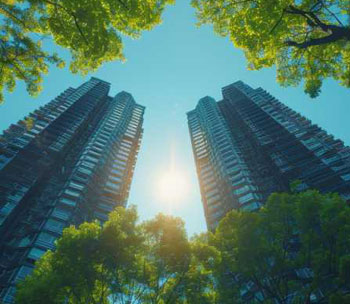
Sustainable Real Estate Development is a potent concept that is redesigning cities all over the world. But it is no longer about greener facades or specks of solar panels, but actual reductions in energy, water, and embodied carbon, set in stone, validated materials, and visible certifications. This change is more rapid in India, particularly in Bengaluru, with code updates, new compliance platforms, and prompt adoption of sustainable building materials with measurably positive performance benefits.
New rulebook: Codes, compliance and credibility.
The market is being aligned by two forces: updated codes and digitized compliance.
ECSBC 2024 (Energy Conservation and Sustainable Building Code) assigns the performance level as either Compliant or Super, which will indicate to developers and purchasers the precise performance of a building on energy efficiency. This is a policy supporting policy, not a marketing statement.
In 2025, the GBPN-BEE national e-compliance portal was declared to streamline the code compliance across the states of India in both residential and commercial buildings- easing the tension of the actual green development and increasing the confidence of the final consumers.
The demand for certification is also soaring. IGBC reports on of billion square feet green footprint (across 16,900 registered and 7,000 operational projects) in total and in specialised Net Zero pathways (executives of investors and tenants a yardstick).
These changes are significant as they provide the Sustainable Real Estate Development with correlations with verifiable results and streamline the process of comparing the choices of lenders, homebuyers, and corporate occupiers.
The materials revolution: reduced carbon, increased performance.
The bill of materials is now the beginning of design. Planners are replacing high-carbon materials with environmentally friendly building materials that reduce the amount of emissions, without affecting the structural strength or longevity:
- LC3 (Calcined Clay Cement – Limestone). In October 2025 news, the Noida International Airport was the first of the large-scale infrastructural projects to specify LC3 (a cement with up to 40 percent less CO2 than OPC), establishing a precedent of mainstream use. Scale and availability scale and availability in India are also signalled when JK Cement also confirmed commercial LC3 production/sales in July-August 2025.
- GGBS/low-carbon concrete blends. Several years afterward, through coordinated efforts of Indian developers and independent analysts, embodied-carbon gain of by replacing clinker with GGBS in concrete was reported – documented in a January 2025 technical write-up with RMI India Foundation backing.
- Geopolymer concrete, Fly ash, and GGBS geopolymer concrete remains immature with IIT Indore (July 2025) reporting as much as 80% reduction of CO2 and 20% reduction of costs, and no curing of water. Although it is necessary to validate the project-specific, it demonstrates how sustainable building materials can open the door to the carbon and cost benefits.
- AAC blocks. A series of 2024-2025-year-old studies indicate that the AAC walls can minimize heat gains and stabilize the indoor temperatures compared to the traditional conventional brick; these features represent a compression into the low cooling loads during the warm months. In a warm Indian climate, AAC is a plausible enveloping building material that is sustainable.
- Low-VOC paint systems. Regulatory pressure is also enhancing the quality of paint standards to limit VOCs (proposed revision of the IS 15489), which is an effort to improve the quality of indoor air, in conjunction with energy performance.
All developers now understand that the shift to sustainable building products, including LC3, GGBS mixes, AAC, recycled steel, and verified low-VOC finishes, is no longer experimental as a 2025 market reality with the policy movement and supply reaction.
The importance of this to Indian cities- Bengaluru water-energy crisis.
The 2024 water crises in Bengaluru accentuated a structural threat of being on a ridge with minimal local resources, making demand drop, recharge, and reuse essential realities of existence in the city. BBMP declared approximately 1,500 additional recharge wells in 306 parks (which add up to approximately 4,200 recharge wells already), with a goal of approximately 543 million liters/year of rainwater recharge by October 2025. Urban design is resiliency on that scale.
In the case of Sustainable Real Estate Development, it would translate into tangible on-site practices: highly efficient fixtures, dual plumbing, smart irrigation, rainwater harvesting (RWH), and STPs with reuse, which are specified during the initial stages and certified. It is also where decisions on materials yield some energy payoffs, so a high-performance envelope coupled with a low-carbon structure yields not only fewer lifecycle emissions and reduced bills but also green labels.
The case study of Bengaluru: what are the main developers doing (with examples of DSR).
The developers of the city are implementing technologies that can be quantitatively positively viewed in terms of performance:
Common areas and rainwater collection, gray water recycling, and smart building management systems are becoming common things, which are being encouraged by progressive Bengaluru developers, such as DSR.
SRP-level requirements of its more recent communities cite STPs and RWH as a component of the base engineering, as well as envelope and finish upgrades, a key element of the Bengaluru climate in lifecycle water and energy conservation.
At DSR Elixir (Whitefield), a large 21.11-acre villa community scheduled for 2025 possession, third-party listings and the developer’s communication highlight a premium spec and master planning scale that can accommodate solar-ready roofs, dual plumbing with treated-water reuse, and advanced waste management—exactly the kind of design canvas that supports deep sustainability features. (Buyers must ensure that the final sustainability specification is in the agreement and the technical annexures.)
What good is (and what should be requested of the client at the site):
- RWH capacity (checked in and on the roof) and Recharge plan, and O&M plan.
- Tertiary treatment and end-use mapping (flush, landscaping, HVAC makeup) STP sizing.
- Common loads and metering logic sizing (kWp) Solar PV.
- Daylighting, envelope specifications (AAC/low-U assemblies), and integration of a BMS.
- Material schedules by referencing to LC3/GGBS concrete mixes, and Ecolabel/IS 15489 compatible, or, where accessible, EPD.
- The relevant certification route- IGBC/GRIHA or code tier (ECSBC 2024), was aimed at.
The figures: performance and embodied carbon.
India: In 2025, data on embodied carbon will have been mainstreamed:
GCCA India published India-specific advice on embodied carbon between high-rise and low-rise embodiment to reduction strategies at the levels A1 according to A5 (materials and construction). This allows design teams to measure the savings of sustainable building materials at the tender stage.
Cement and concrete decarbonization national/industry roadmaps (released in March 2025) identify items such as clinker substitution (LC3 + calcined clays + GGBS + fly ash) to alternative fuel producers, which offers developers a supplier due diligence checklist.
To investors and homebuyers, this shifts the dialogue to the green intent to practical reductions in kWh, liters, and kgCO2e per square meter in accordance with global reporting.
How DSR can manage to be ahead (and what we advise for 2025 projects).
For a real estate company in Bangalore focused on premium living, leadership now means operationalizing sustainability into every drawing set, BOQ, and work order. According to the existing policy and market indications, the following playbook of DSR projects is 2025-ready:
- Target code + certification +. Select an ECSBC 2024 concept-level tier and match it with an IGBC pathway (e.g., Green Homes/Net Zero) so that design decisions align with both compliance and marketable certification.
- Delta locks early on materials.
- Form: identify LS3 or GGBS-rich blends (where appropriate).
- Envelope: Developed thermal performance AAC blocks; detailed thermal breaks in slabs/balconies.
- Interiors: low-volatility paints that meet the updated version of IS 15489.
- Recorded kgCO2e/m2 reduction over the baseline.
- Publish the water math. Bengaluru customers attach importance to longevity: reveal RWH storage/recharge, STP KLD, reuse breakdown, and expected fresh-water savings due to normal occupancy.
- Quantify energy + PV yields. The share modelled EPI (kWh/m2/yr), solar PV kWp, and percentage common-area load offset, both of which are connected to BMS monitoring and homeowner apps.
- Digitize compliance and O&M. Conform to the national compliance evolutionary workflow ahead, and have the same data model on monitoring data after handover, so all savings are visible to the residents and HOA committees.
These can be transformed into the standard procedures to enable DSR to make Sustainable Real Estate Development not a premium feature but a default one.
It is the greater city’s influence that is on the ground.
- Reduced grid stress: effective envelopes and systems will result in a lowering of peaking loads, particularly during hot spells in Bengaluru.
- Water security: at the building level, reuse and recharge allow maintaining seasonal water resources; on larger city scales, using DSR can be net positive with recharge and reuse.
- Cleaner indoor atmosphere- Low-VOC material interiors and enhanced ventilation contribute to the healthy indoor environment, particularly in densely populated urban areas.
- Open price: the tiers of code, and disclosures of embodied-carbon, allow buyers to think apples to apples–and reward projects that actually work.
Conclusion: Design is our most practical climate lever
Re-modeling our urban constructions and the way we construct them is the quickest route towards future-proofing Indian cities. As Sustainable Real Estate Development correlates with real standards (ECSBC 2024), a national e-compliance platform is implemented in 2025, and such verifiable environmentally friendly building materials like LC3, GGBS mixes, AAC, recycled steel, and low-VOC systems are scalable, this has ceased to be a theoretical possibility. Its execution.
This change of direction is necessitated by the water-energy reality of Bengaluru; users who incorporate and promote the use of rainwater harvesting systems, sophisticated STPs, solar PV, and low-carbon substances, and report the figures will be examples of what urban living can sustain, and investor confidence will be restored. Solar and RWH are already mentioned in DSR in its portfolio and communications; it is high time to cement those features with definite metrics (kWp, KLD, kWh/m2, kgCO2e/m2) in each new launch. That is what design will bring about actual change, project after project, neighborhood after neighborhood, until the sustainable option becomes the default one for all buyers in the city.