When Time Shrinks: Redefining India’s Growth Corridors
-
by admin
- Market Insights
- 0
Infrastructure does not change cities overnight.
It changes how cities relate to one another.
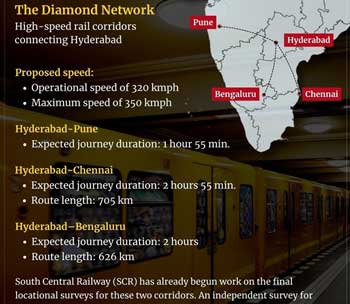
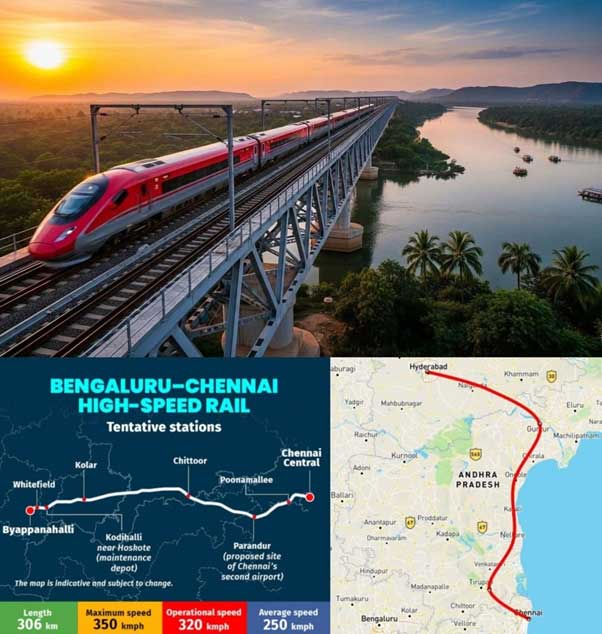
With high-speed rail corridors being envisioned across Bengaluru, Chennai, Hyderabad, and Pune, India is approaching a defining shift—where distance will no longer dictate opportunity, and geography will no longer limit growth.
This is not just about faster trains.
It is about the emergence of a connected regional economy.
At DSR, we see this as a moment that will reshape how people live, work, invest, and build across India’s most dynamic urban centres.
High-Speed Rail: A Structural Shift, Not a Transport Upgrade
World-class infrastructure follows a consistent pattern.
First, it compresses travel time.
Then, it compresses economic distance.
Finally, it reshapes urban behaviour.
When Bengaluru, Chennai, Hyderabad, and Pune are connected through high-speed rail:
- Businesses operate across cities without friction
- Talent moves freely without permanent relocation
- Capital follows connectivity, not speculation
- Cities grow together instead of competing in isolation
This is how regional markets mature.
From Individual Cities to Integrated Growth Corridors
Each of these cities already plays a critical role in India’s growth story:
- Bengaluru as a global technology and innovation hub
- Chennai as a manufacturing, logistics, and industrial powerhouse
- Hyderabad as a centre for technology, pharmaceuticals, and enterprise
- Pune as a knowledge, automotive, and education-driven economy
High-speed rail does not replace their identities.
It amplifies them through integration.
When these cities connect at scale, the result is not faster travel—it is collective economic acceleration.
What This Means for Urban Development and Real Estate
Infrastructure has always been the most reliable predictor of long-term real estate performance.
High-speed rail will influence development in ways that go beyond price appreciation:
- Residential demand will align more closely with connectivity than city limits
- Peripheral and emerging corridors will gain relevance through access, not proximity
- Rental markets will strengthen due to multi-city professional mobility
- Well-planned communities will outperform isolated developments
The future belongs to location-intelligent development, not opportunistic expansion.
The Human Impact of Regional Connectivity
Beyond economics, high-speed rail fundamentally changes everyday life.
It enables:
- Professionals to work across cities without uprooting families
- Businesses to expand talent pools without relocation pressure
- Families to access education, healthcare, and opportunity across regions
- A healthier balance between career growth and personal stability
Infrastructure succeeds when it serves people—not just systems.
DSR’s Leadership Lens: Building for Long-Term Relevance
At DSR, we have always believed that infrastructure signals where cities are going—not where they are today.
That belief shapes how we evaluate:
- Locations
- Connectivity depth
- Livability ecosystems
- Long-term relevance across market cycles
High-speed rail reinforces a principle we stand by:
Sustainable value is created where connectivity, credibility, and community intersect.
We do not build for moments of demand.
We build for decades of relevance.
India’s Next Phase: A Multi-City Growth Ecosystem
The Bengaluru–Chennai–Hyderabad–Pune network points to something larger than speed.
It signals the rise of a multi-city economic ecosystem, where:
- Growth is distributed, not concentrated
- Opportunity is connected, not isolated
- Infrastructure leads development—not the other way around
This is how globally competitive regions are formed.
Final Leadership Thought
High-speed rail will shorten journeys.
But its real impact will be measured in how it reshapes ambition, access, and opportunity.
For cities, the question is no longer whether connectivity matters.
It is how early and how intelligently we align with it.
At DSR, we believe the future belongs to those who build with foresight—
because when cities move closer, long-term value moves faster.